
Above the water, Akaroa's wharf replacement is visible in cranes and marine plant. Beneath it, a monitoring system is listening for a different kind of activity. An acoustic buoy deployed during the rebuild is intended to help the construction team respond when dolphins approach and track the noise generated by piling.
Cawthron Institute described the deployment on 11 September 2026. Its Blue Technology Group worked with Cetaware and Ocean Intelligence on a buoy that processes underwater sound and sends potential marine mammal detections to a project interface. Cawthron says the information alerts on-site observers and contractors so noisy piling can be paused when dolphins approach the work zone.
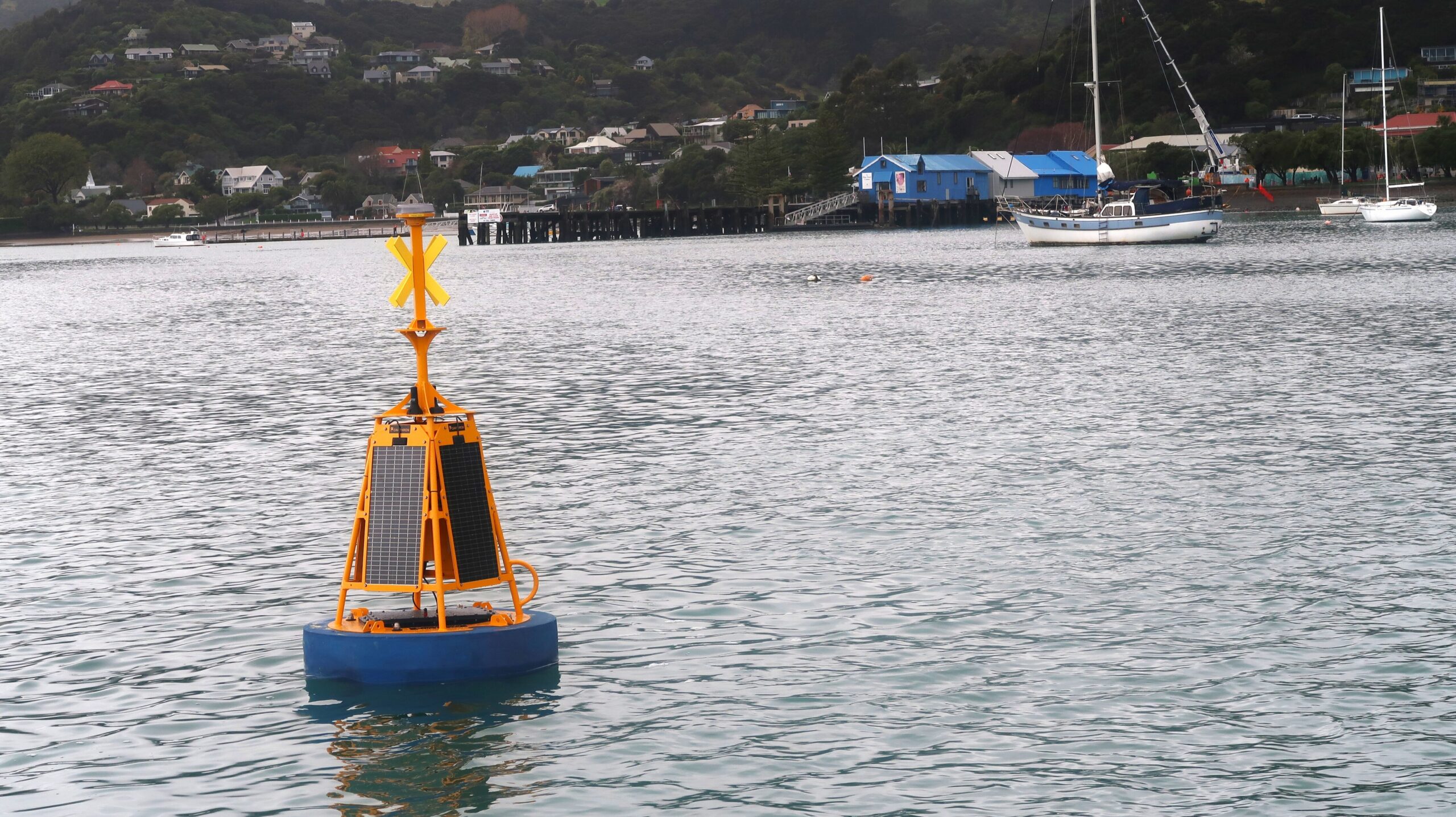
The same installation monitors piling noise at a 300-metre compliance boundary. According to Cawthron, it supports the project's consent-compliance record as well as the immediate detection task. Those are related uses of sound data, but they answer different questions: whether a possible animal detection needs attention, and what sound levels the construction activity is producing at the monitoring position.
The project sits within a wider coastal consenting process. The joint hearing decision, released on 20 May 2026, granted the redevelopment application with conditions. The publicly described activities include seabed disturbance, coastal occupation and noise, alongside temporary construction works. Monitoring therefore belongs within the delivery arrangements for a consented marine job rather than being an unrelated research exercise beside it.
The practical connection is between observation and action. A stream of information becomes useful to construction when the responsible people can recognise what requires a response and carry out the agreed procedure. At Akaroa, Cawthron's published description explicitly connects detections with the observers and contractors who can pause piling. It places the output of a technical system within a working decision chain.
For other marine projects, that relationship is worth examining early. The relevant environmental specialists and consent documents establish what must be monitored and how work is managed. Equipment selection then needs to support those requirements, including how information is delivered to the people responsible for acting. A technically impressive reading has limited operational value if its purpose and recipient are unclear.
The compliance record has another role. Information retained during the work can help the responsible specialists examine what happened at a particular time. The useful record keeps the measurement, its context and the associated response understandable. That supports a more specific discussion than a broad assurance that monitoring equipment was present somewhere on the site.
Akaroa offers a concrete example of environmental technology being connected to a construction method. Its significance lies in the feedback loop: listening, reviewing information and responding through the project's established arrangements. The September deployment report explains the system's purpose and early operation; continuing performance and compliance need to be assessed through the actual project records. The wharf story extends below the deck, into the information used to manage the marine work as it proceeds.