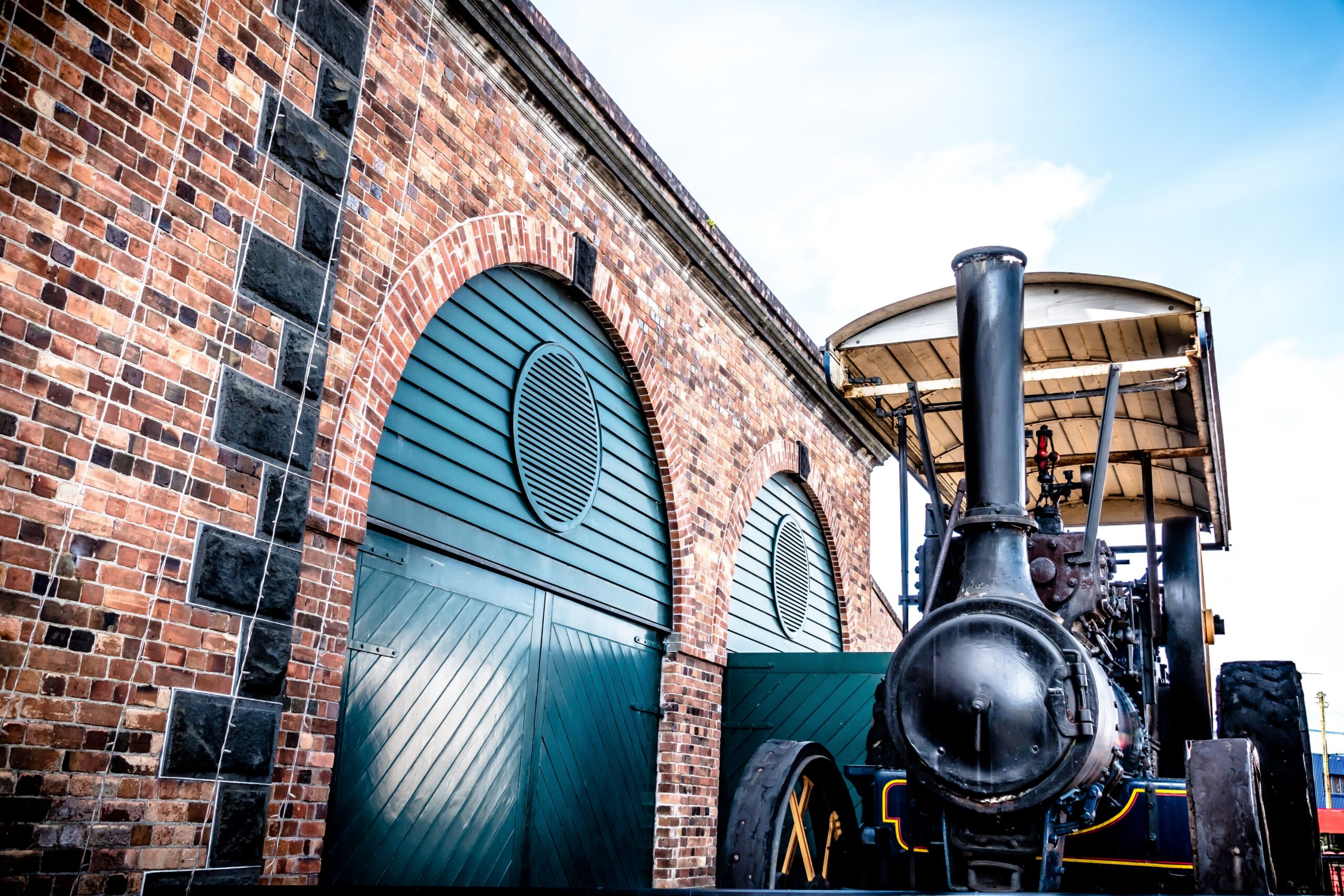
Industrial buildings often carry their history in plain sight: large openings, robust materials and spaces shaped around work rather than display. A new use can keep such a place active. The challenge is to understand which qualities should guide the change, rather than treating the old fabric as decoration.
Understand before designing
Gather the available history and building records, and involve suitable heritage and technical advisers. Identify what is significant, what has changed and what needs investigation. A striking room or piece of equipment may be only part of the story. Ask how the proposed use relates to the building’s spaces and what intervention it would require.
Test the operational fit
Work through access, occupancy, servicing and the practical requirements of the new activity. Have the responsible professionals establish the applicable building, planning and heritage requirements. Keep the feasibility discussion honest about constraints and unknowns. A use that appears commercially attractive may demand changes that are difficult to reconcile with the building or its setting.
Make the new work understandable
Discuss how new elements can serve the intended use while allowing the existing building to remain legible. That does not mean freezing every surface or pretending modern work is old. It means making deliberate choices about what is retained, repaired, adapted or introduced, with the reasons recorded. Include maintenance and future management in the brief so the completed project can be looked after. Adaptive reuse is strongest when the building’s past informs a useful next chapter. The new purpose should give people a reason to use the place while preserving enough of its character to understand why it matters.