
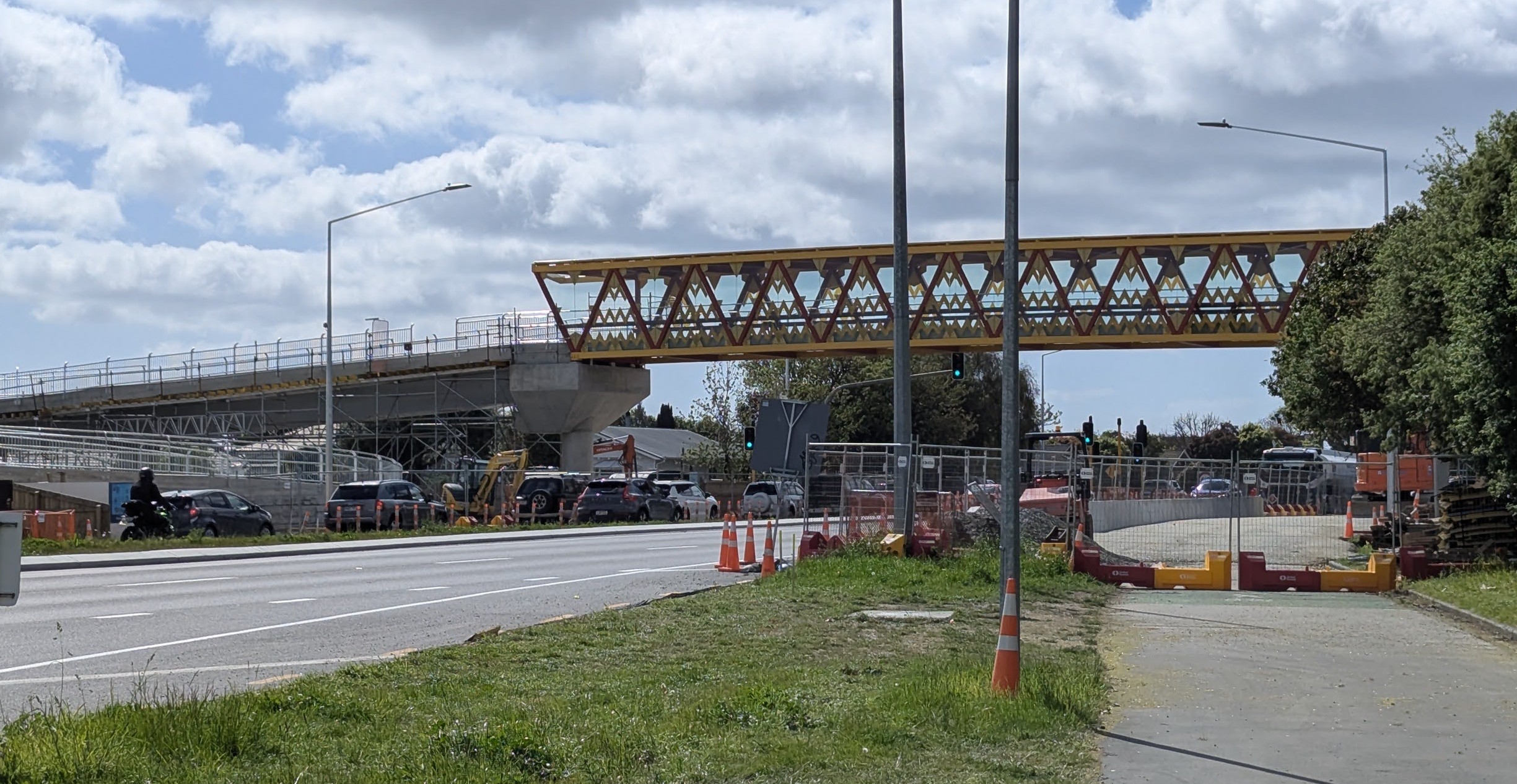
The next stage of Christchurch’s SH76 Brougham Street upgrade has moved into planning following the appointment of a contractor. In its 23 October announcement, the Government said Downer had been selected for Stage Two, with work on the ground expected to begin in the new year.
The same announcement said the new pedestrian and cycle bridge between Collins and Simeon Streets was in place, with NZ Transport Agency expecting it to open in November. Further landscaping and finishing work around the bridge was expected to continue into early 2027. These dates are published expectations, rather than confirmation here that the bridge has opened or that Stage Two has started.
The distinction is relevant to anyone delivering a project in phases. A structure can be physically installed while access, testing, finishes or surrounding works still prevent public use. Equally, one part can become operational while another remains a work site. Describing every milestone simply as completion makes the actual boundary harder to manage.
A clear phase-handover schedule should identify what is being released, who accepts it and what remains under construction control. Draw the boundary on a plan, then test it against the routes used by workers, deliveries, maintenance staff and the public. The boundary needs to work in daily operation, rather than exist only as a line in a report.
Outstanding items should be specific. A retained defect, an incomplete landscape area and an operating restriction may all require different owners and close-out evidence. Keeping them in one unstructured list can hide the difference between work that is cosmetic and work that affects readiness for use. The accepted design and project requirements determine those judgements.
For businesses using Brougham Street, future improvements and current journey planning are also separate subjects. Deliveries should follow current NZTA notices and traffic arrangements. A published future start or opening date is a reason to check for an update, not a substitute for the latest instruction.
The announcement shows a major route changing through several stages at once. Its useful lesson for construction teams is to report readiness precisely. State which part is available, which part remains restricted and what needs to happen next. That gives every participant a clearer basis for planning than a broad claim that the project is nearly finished.