
Raising Akaroa's main wharf means changing much more than the surface people walk on. Christchurch City Council's approved concept lifts the deck by 600mm, bringing the shore connection and adjoining buildings into the design problem. The replacement is a coordinated marine structure whose interfaces begin before the first new deck element is placed.
The project is already in its construction phase. In its September 2026 update, the Council reported that staging work and initial dredging near the Recreation Ground were complete, with the Patiki barge and three cranes in Akaroa. That dated progress report is the latest construction update displayed on the project page checked on 3 November.
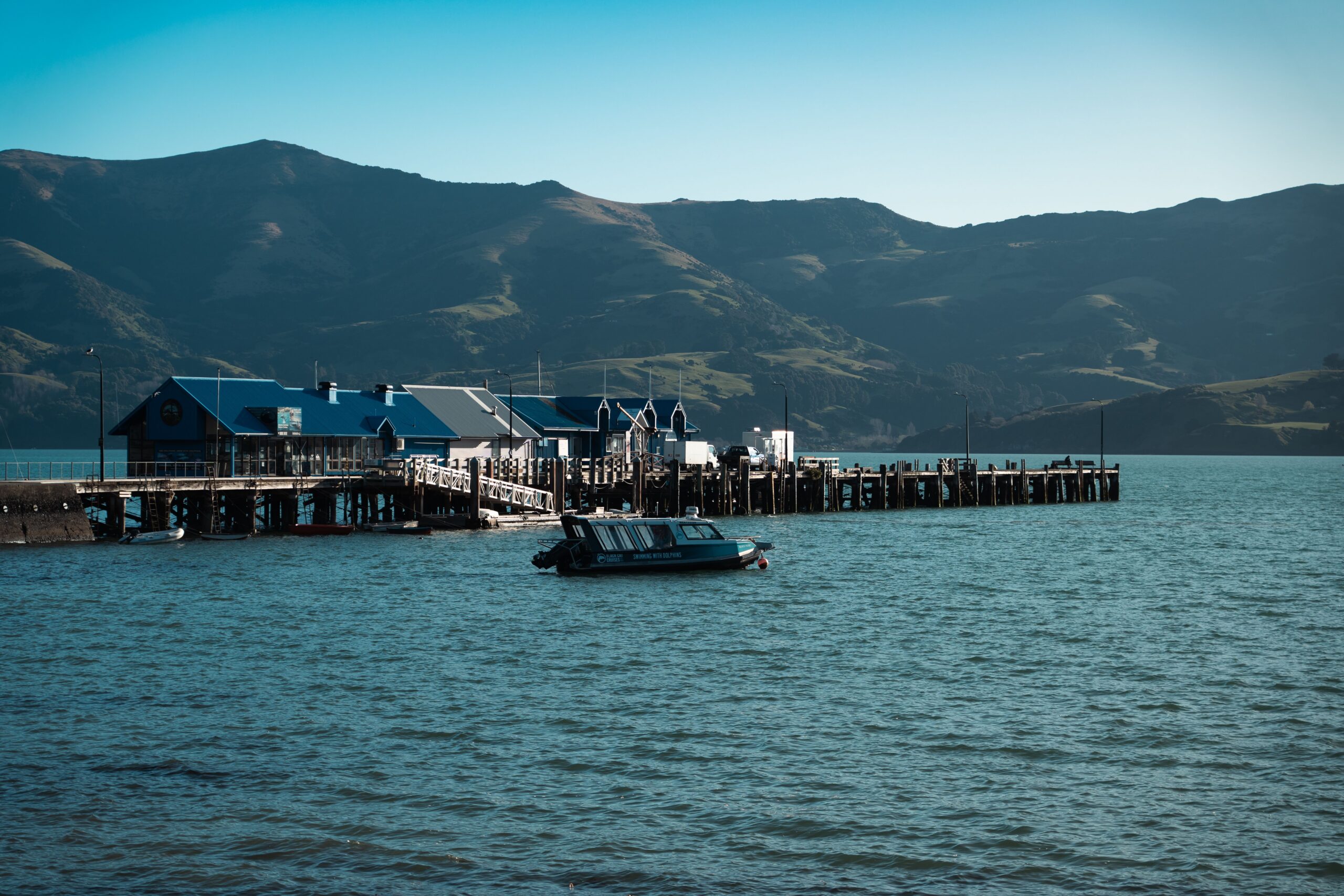
The published construction methodology explains why preparation occupies so much of the job. The August 2025 document describes a working area at the boat ramp, a barge-loading arrangement and separate activity at the wharf entrance. These are the supporting systems through which plant and material reach the marine work.
The methodology sets out a sequence in which land-based piling advances before demolition follows behind it, using parts of the old structure during the operation. A marine-based crew works from the outer end. The document says the two piling rigs would not undertake piling concurrently, even as the work fronts advance together. These are details of the published construction approach, rather than a daily account of which activity is happening on site now.
That sequence illustrates an important engineering relationship: the condition and temporary use of an existing structure can influence how its replacement is built. Demolition, temporary support and new permanent work need to be considered together. Removing an old asset is therefore part of the construction method, with consequences for access and the equipment that can be used at the next stage.
The procurement history also shows contractor input arriving during design. The Council's early-contractor-involvement request for proposals was awarded to HEB Construction on 24 February 2025. Its stated purpose included constructability, staging, methods and project risk. A later pontoon tender, which closed on 21 September 2026, identifies HEB as the main wharf contractor and separates pontoon design and supply from on-site installation.

That pontoon package covers two floating pontoons and associated gangways and equipment. It makes the interface explicit: the supplier's scope includes supervision while the main contractor undertakes assembly and installation. For other projects, the useful lesson is to define where a specialist package ends and the main works begin while the design information is still being coordinated.
Akaroa's replacement brings together a raised public deck, a marine construction sequence and several delivery interfaces in a small working area. The construction documents help explain how those parts fit. They also need to be read with their dates intact: an approved approach, a closed procurement stage and a reported milestone each describe a different part of the project's progress.